How Owners Are Scheduling Renovations to Maximize Revenue and Minimize Risk
For hotels and resorts with seasonal peaks, renovation planning is about more than scope, budget, and design. It’s about timing.
Unlike year-round urban properties, seasonal hotels operate within a limited window of peak revenue generation. Whether it’s a coastal resort, mountain lodge, lakeside retreat, or destination boutique hotel, every renovation decision must be evaluated against occupancy patterns and revenue opportunities.
One of the most common questions owners face is whether to prioritize interior or exterior renovations first. The answer depends on several factors, including property condition, market positioning, brand requirements, and guest expectations.
What we’re seeing across hotel renovations is that the most successful seasonal properties aren’t necessarily choosing one over the other. They’re developing strategic sequencing plans that align renovation work with peak and off-season operating windows.
The key is locking that sequencing plan in early.
Why Timing Matters More for Seasonal Properties
For a seasonal hotel, losing revenue during peak demand periods can have a disproportionate impact on annual performance.
Many properties generate a significant share of their annual revenue in just a few months. According to hospitality industry data, resort destinations often see occupancy levels exceed 75% to 85% during peak seasons, making operational disruption far more costly than during slower periods.
Because of this, renovation planning cannot be treated as an afterthought.
Seasonal properties must often make renovation decisions six to twelve months before construction begins to ensure work is completed during the most advantageous window.
Owners who delay planning often find themselves forced to choose between:
- Postponing needed improvements
- Renovating during revenue-generating periods
- Compressing schedules and increasing costs
None of those options is ideal.

Understanding Interior Renovations
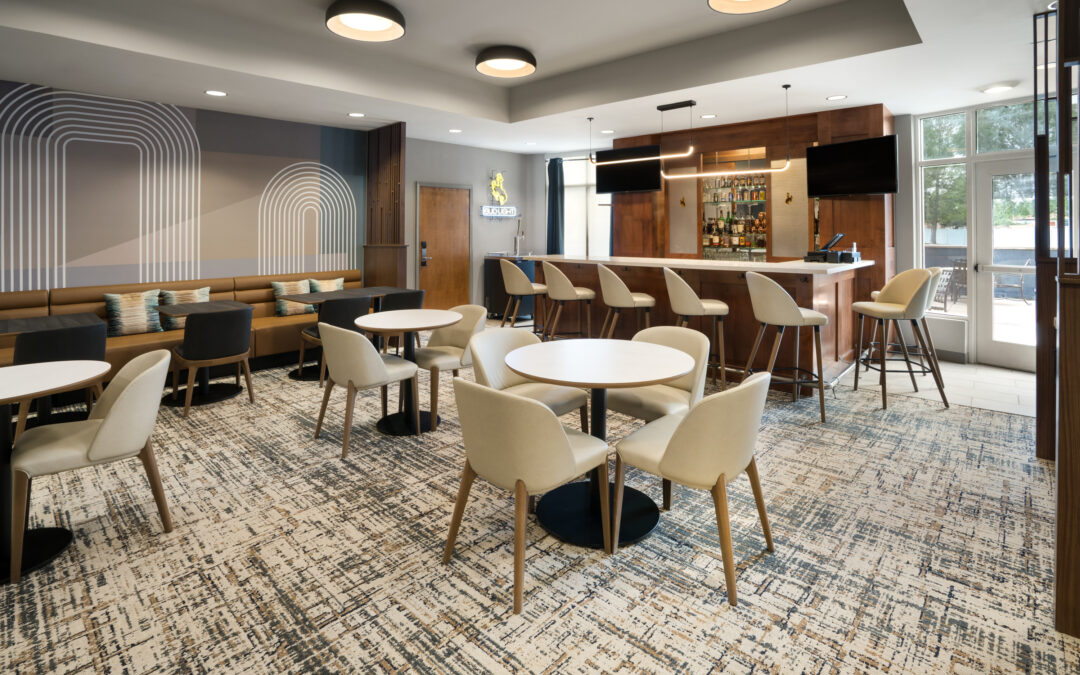
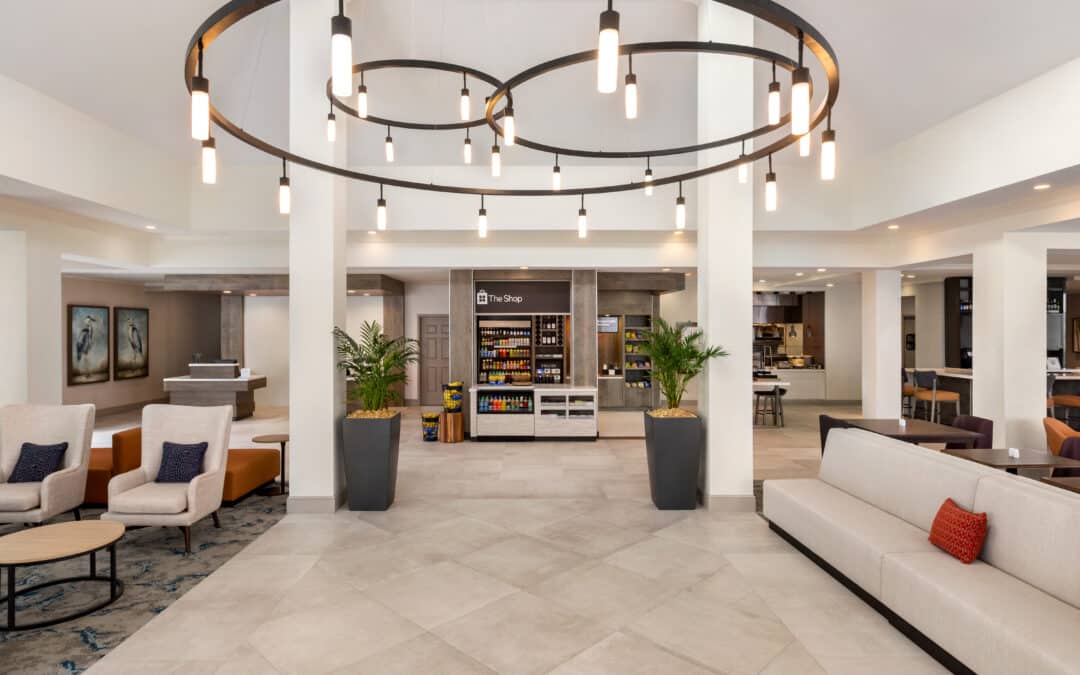
Interior renovations typically focus on spaces guests interact with most frequently, including:
- Guestrooms
- Bathrooms
- Corridors
- Lobbies
- Meeting spaces
- Restaurants and bars
- Fitness and wellness areas
These projects often have the most direct impact on guest satisfaction and online reviews.
Studies consistently show that room quality, cleanliness, comfort, and overall appearance remain among the most influential factors affecting guest ratings and booking decisions.
Because guestrooms generate revenue directly, interior renovations often provide some of the fastest measurable returns.
Benefits of Prioritizing Interior Renovations
For many seasonal properties, interior upgrades can deliver immediate guest-facing improvements.
Benefits often include:
- Increased guest satisfaction scores
- Improved online reviews
- Enhanced brand compliance
- Greater pricing flexibility
- Higher perceived value
Well-executed guestroom renovations may support higher Average Daily Rate (ADR) and improved occupancy performance, which can contribute to RevPAR growth over time.
Owners often prioritize interiors when:
- Guest feedback is declining
- PIPs focus heavily on guestrooms
- Brand standards have evolved
- Competitive properties have recently upgraded
Understanding Exterior Renovations
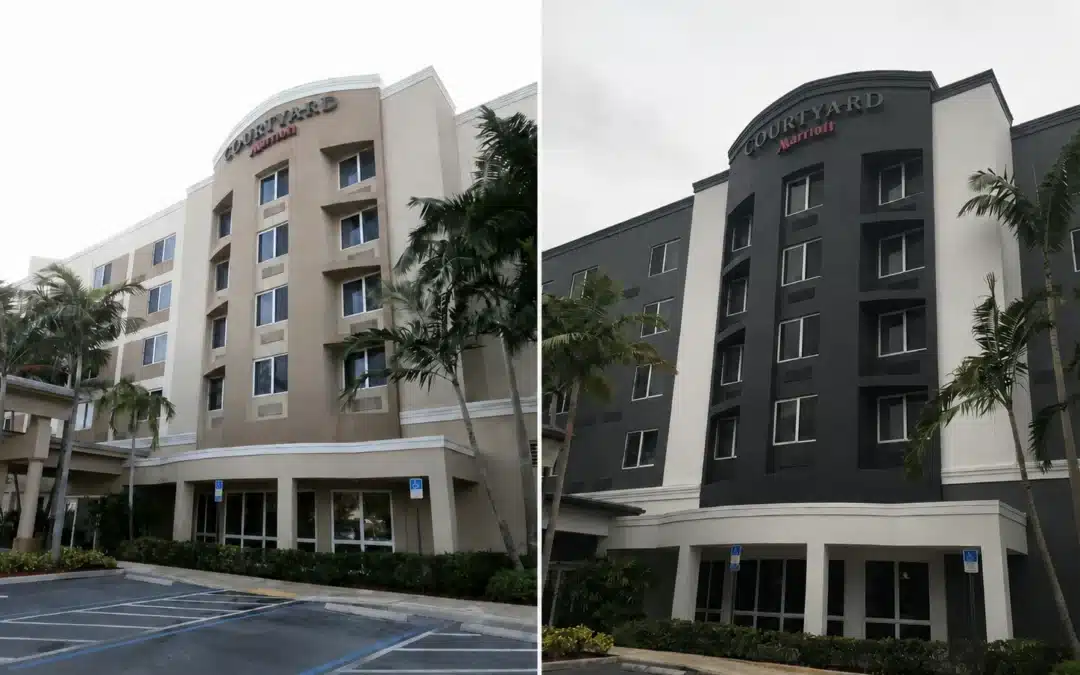
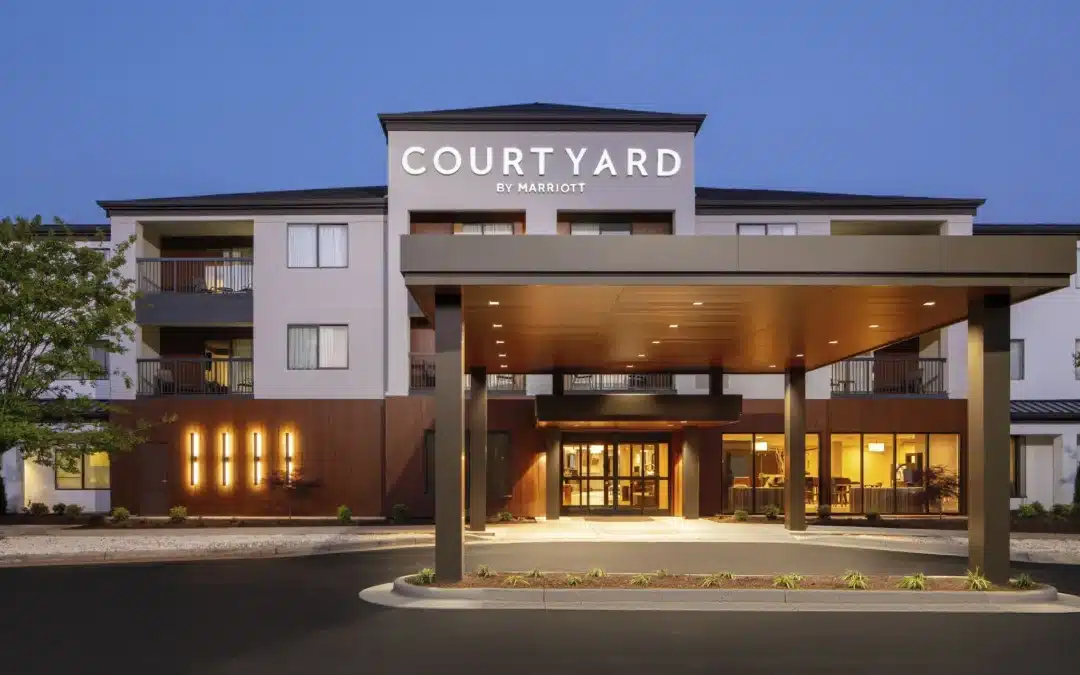
Exterior renovations focus on a property’s curb appeal, building envelope, functionality, and first impression.
Common exterior projects include:
- Façade improvements
- Exterior painting
- Window replacement
- Signage upgrades
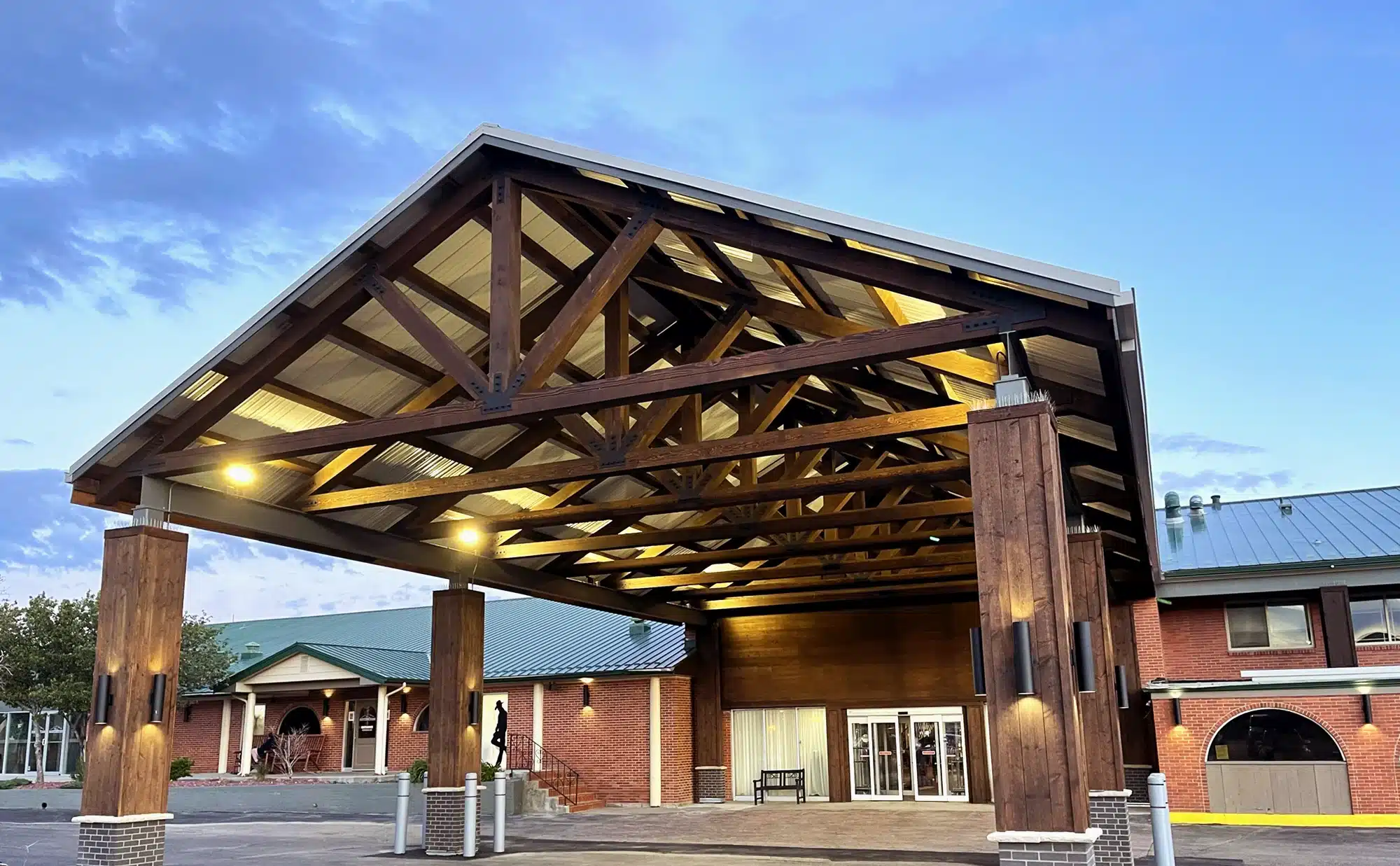
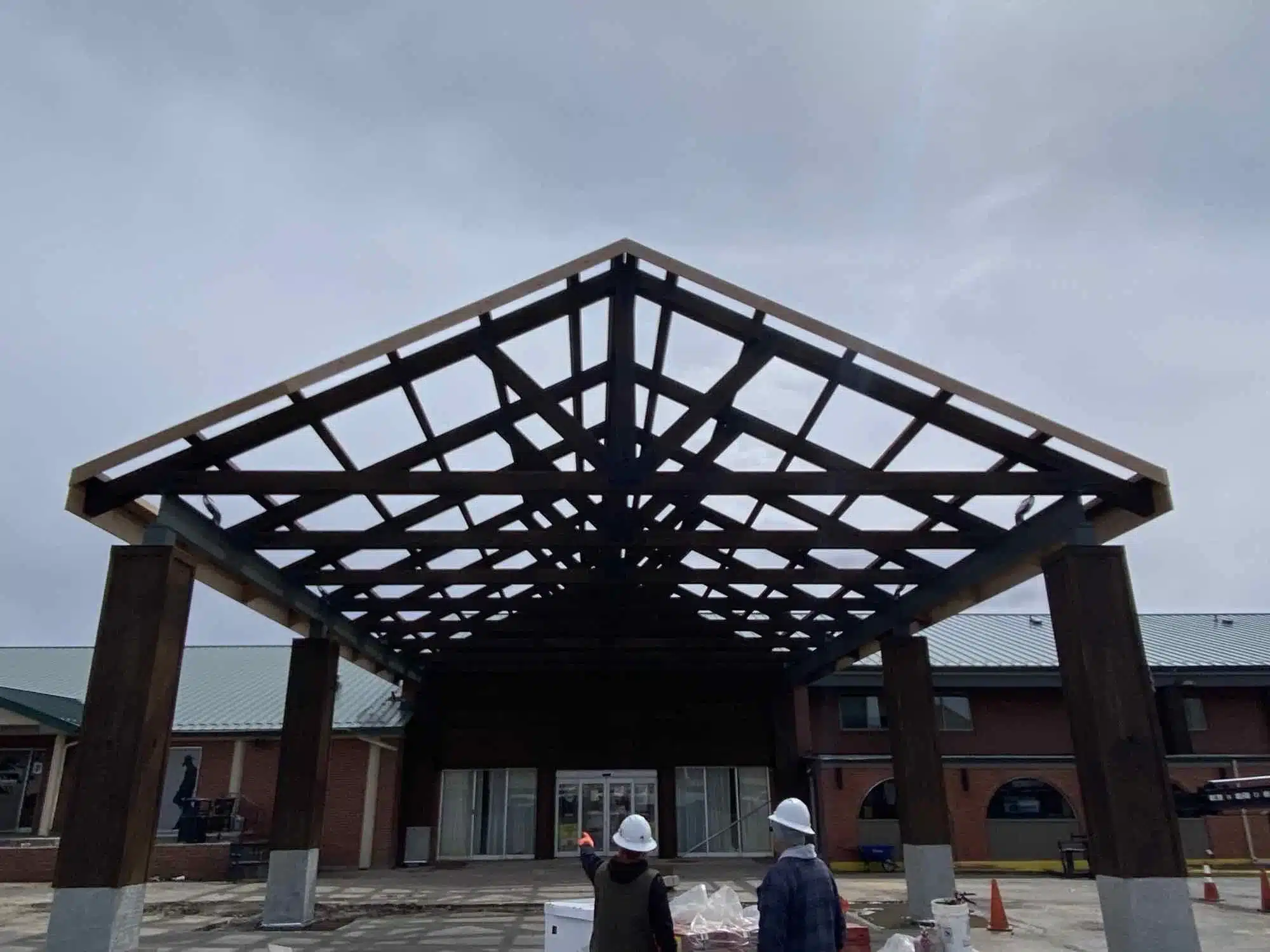
- Porte cochere reconfiguration
- Roofing improvements
- EIFS repairs
- Site enhancements
While exterior renovations may not immediately impact the guest experience once inside, they often influence booking decisions before a guest ever enters the building.
First impressions matter.
According to hospitality consumer research, visual appearance is one of the most important factors travelers consider when evaluating accommodations online and in person.
most important factors travelers consider when evaluating accommodations online and in person.
Benefits of Prioritizing Exterior Renovations
Exterior projects can deliver significant operational and asset-level benefits.
Potential advantages include:
- Enhanced curb appeal
- Stronger brand presentation
- Increased property value
- Improved energy efficiency
- Reduced maintenance costs
- Better weather protection
For aging properties, exterior work may also address deferred maintenance issues before they become larger repair expenses. Owners often prioritize exterior projects when:
- The building shows visible wear
- Brand conversions are planned
- Water intrusion concerns exist
- Window or façade systems are approaching end of life
The ROI Question: Interior vs. Exterior
Owners frequently ask which type of renovation generates better ROI.
The reality is that both contribute differently.
Interior renovations often produce more immediate guest-facing benefits that can influence:
- ADR
- Guest satisfaction
- Online reputation
- Repeat visitation
Exterior renovations often provide longer-term value through:
- Asset preservation
- Energy savings
- Reduced maintenance
- Improved marketability & curb appeal
For seasonal properties, ROI is rarely about choosing one over the other. It’s about sequencing investments to maximize impact while protecting revenue.
RevPAR Considerations
Revenue Per Available Room (RevPAR) remains one of the most important performance metrics in hospitality.
While renovations alone don’t guarantee RevPAR growth, they often support improved performance by helping properties:
- Remain competitive within their market
- Align with evolving guest expectations
- Maintain brand standards
- Support premium pricing strategies
Industry studies have shown that renovated hotels can experience RevPAR increases ranging from 5% to 15%, depending on market conditions, renovation scope, and execution.
What we’re seeing across hotel renovations is that projects delivering the strongest RevPAR outcomes typically involve thoughtful planning rather than rushed execution.
Why Sequencing Matters
For seasonal properties, sequencing may be more important than the scope itself.
Consider a beachfront resort entering its peak summer season.
An exterior renovation involving painting, scaffolding, and façade work may create visual disruption precisely when guests are paying premium rates.
Conversely, attempting a large guestroom renovation during peak occupancy can create operational challenges and reduce inventory availability.
This is why successful owners develop phased renovation plans that align with operational realities.
A typical sequencing strategy may look like:
Off Season/Low Occupancy Periods:
- Guestroom renovations
- Corridor improvements
- Interior finish upgrades
- Exterior painting
- Window replacement
- EIFS repairs
- Porte cochere improvements
- Major infrastructure work
Shoulder Season:
- Public space upgrades
- Lobby renovations
- Restaurant improvements
Weather-Sensitive Construction Work:
- Exterior painting
- Window replacement
- EIFS repairs
- Porte cochere improvements
- Major infrastructure work
The exact sequence varies by property, but the principle remains the same: align construction activity with the least disruptive operational window.
Planning Earlier Creates More Options
How owners are thinking about risk in 2026 continues to evolve.
Many are beginning renovation conversations earlier, not because they intend to build immediately, but because they want more flexibility.
Early planning allows owners to:
- Evaluate both interior and exterior needs simultaneously
- Coordinate procurement more effectively
- Align projects with seasonal demand patterns
- Explore value-engineered solutions
- Reduce scheduling conflicts
What we’re seeing across hotel renovations is that properties that start planning early often have more options and fewer compromises.
Sequence First, Renovate Second
At Amerail Systems, what we’re seeing across seasonal hotel renovations is that timing often determines success as much as scope.
Interior renovations can enhance guest experience and support revenue growth. Exterior renovations can strengthen first impressions, protect assets, and improve long-term performance. Both play an important role in maintaining a competitive property.
The challenge for seasonal hotels isn’t deciding whether to renovate the interior or exterior first. It’s developing a renovation sequence that aligns with occupancy patterns, protects revenue, and positions the property for long-term success.
The earlier that planning begins, the more opportunities owners have to execute renovations on their terms, not the calendar’s. Understand your options before peak and off-season windows arrive.