A Realistic Timeline for Owners & Operators
If there’s one renovation planning reality that continues to surface across hotel projects, it’s this: the most successful renovations don’t start with construction. They start months earlier with planning.
As spring approaches each year, many hotel owners and operators begin thinking about renovations. And for good reason. Spring has become a natural planning window, a time when owners evaluate performance, review budgets, and prepare for execution windows later in the year.
But the real question isn’t just when should construction start? It’s when should planning begin?
What we’re seeing across hotel renovations is that owners who start planning in spring are often positioning themselves for smoother execution, better cost control, and fewer surprises down the line.
Why Spring Has Become Peak Planning Season
Spring sits at a unique intersection in the hospitality calendar. Winter performance data is in, summer demand is approaching, and budget planning is actively underway.
This makes it an ideal time to step back and evaluate:
- Property condition after peak winter usage
- Upcoming brand requirements or PIPs
- Guest feedback trends
- Capital allocation for the remainder of the year
Across the industry, spring has become less about reacting and more about preparing.
Owners who use this window effectively are not necessarily committing to immediate construction. They are gaining clarity on scope, sequencing, and feasibility before execution windows open.
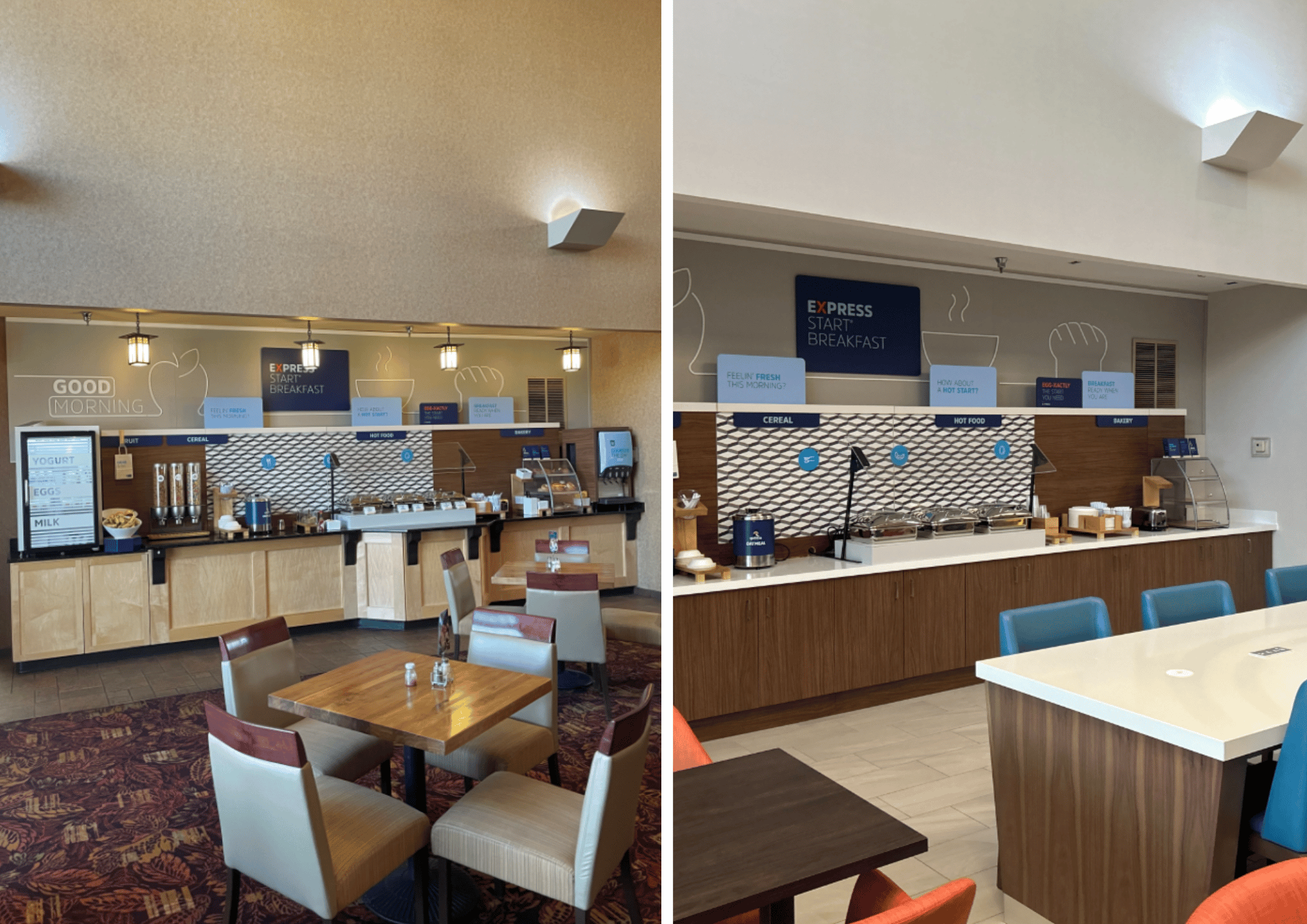
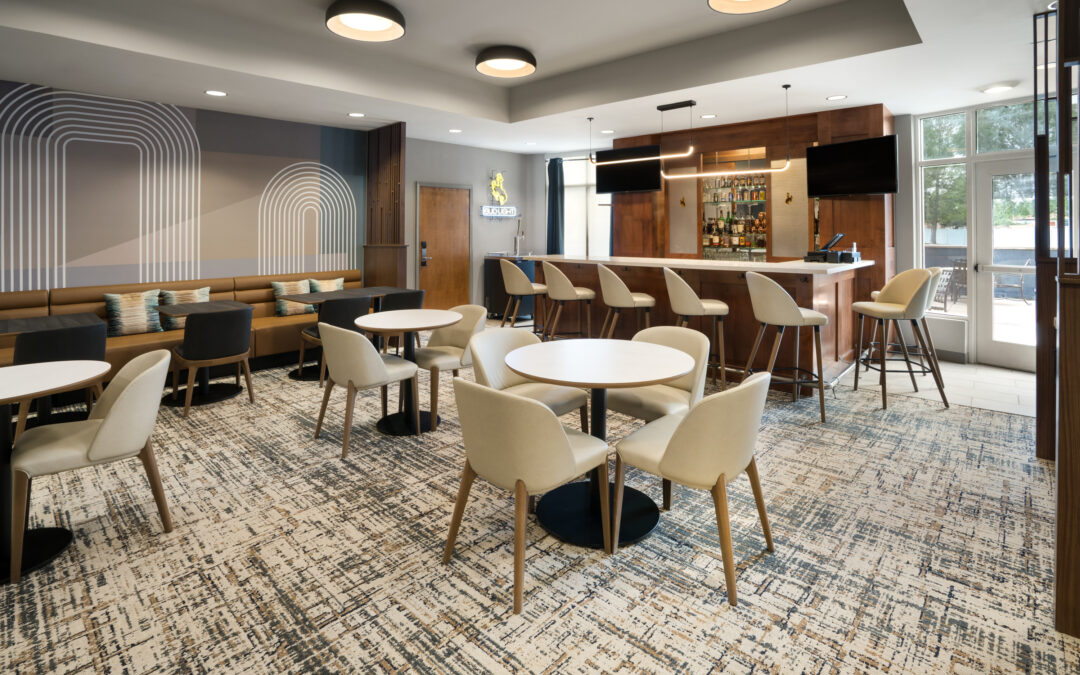
Holiday Inn Express’s Dining Room Before and After
A Realistic Hotel Renovation Timeline
One of the most common misconceptions is that renovation timelines begin when construction starts. Here’s how a typical timeline unfolds:
1. Early Planning & Assessment (0–2 Months)
This phase often begins in spring.
Owners evaluate property conditions, review brand standards, and begin aligning internal stakeholders. At the portfolio level, this is also when sequencing decisions start to take shape. According to U.S. Bureau of Labor Statistics data, the hospitality sector remains one of the largest employment categories in the country, reinforcing how labor availability and cost pressures continue to influence renovation timing and execution.
Key activities during this phase include:
- Reviewing PIPs or brand updates
- Assessing interior and exterior conditions
- Identifying priority areas for renovation
- Establishing preliminary budgets
What we’re seeing across hotel renovations is that early assessment reduces uncertainty later. It allows owners to move forward with direction rather than urgency.
2. Design Development & Scope Alignment (2–4 Months)
Once priorities are identified, the focus shifts to defining what the renovation will actually involve.
This is where scope becomes clearer and where early decisions have the greatest impact on cost and schedule.
During this phase:
- Design concepts are developed
- Material and finish selections begin
- Budget estimates are refined
- Value engineering opportunities are explored
- Brand approvals may begin
This stage often determines whether a project feels controlled or compressed later on.
3. Procurement & Pre-Construction (3–6 Months)
Procurement has become one of the most important and often underestimated parts of the renovation timeline.
Material lead times, especially for case goods and specialty finishes, require early coordination. Owners who delay this phase often encounter tighter schedules and fewer options.
Typical activities include:
- Finalizing material selections
- Ordering FF&E and finishes
- Coordinating logistics and delivery timelines
- Securing permits (if required)
- Finalizing construction schedules
Across multiple properties, this phase becomes even more critical. Early procurement allows for better alignment across projects and reduces the risk of delays.

4. Construction Execution (2–6 Months)
Construction is the most visible phase, but it is built on everything that comes before it.
Depending on the scope, construction may be phased to allow the hotel to remain operational. Floor-by-floor or area-by-area sequencing is often used to minimize disruption.
Key considerations include:
- Guest-sensitive scheduling
- Coordination with hotel operations
- Quality control and inspections
- Ongoing communication between teams
What we’re seeing across hotel renovations is that projects with strong early planning tend to move through construction more efficiently, with fewer interruptions.
5. Final Completion & Closeout (1 Month)
The final phase includes punch list completion, inspections, and closeout documentation.
A well-planned project often results in a smoother turnover, with fewer outstanding items and clearer alignment with brand standards.
What This Timeline Means in Practice
When you step back and look at the full timeline, a clear pattern emerges:
- Planning typically begins 6–9 months before construction
- Procurement decisions often need to happen 3–6 months in advance
- Execution windows are influenced by both seasonality and occupancy trends
This is why spring planning is so important. It creates a runway for projects that may not begin construction until late summer, fall, or even early the following year.
How Owners Are Thinking About Timing in 2026
How owners are thinking about risk in 2026 is directly influencing renovation timing.
Rather than waiting for urgency, such as declining performance or approaching deadlines, many are choosing to start conversations earlier.
What we’re seeing across hotel renovations is a shift toward:
- Earlier evaluation without immediate commitment
- More deliberate sequencing across portfolios
- Greater focus on cost predictability
- Increased coordination with brand timelines
This approach doesn’t accelerate construction. It de-risks it.
The Cost of Starting Too Late
Delaying renovation planning doesn’t eliminate complexity. It compresses it.
When planning starts too late, owners often face:
- Overlapping project timelines
- Limited procurement flexibility
- Reduced opportunity for value engineering
- Increased pressure on operations
- Less room to adapt to changing conditions
Across multiple properties, these challenges tend to compound rather than stay isolated.
A More Strategic Approach to Renovation Planning
The most consistent trend we’re seeing is not faster renovations: it’s earlier thinking.
Owners who begin planning in spring are able to:
- Align projects with occupancy cycles
- Evaluate scope without time pressure
- Coordinate across multiple properties
- Maintain flexibility in capital allocation
This creates a more stable path from planning to execution.
Timing Creates Clarity
At Amerail Systems, what we’re seeing across hotel renovations is that timing plays a larger role than many expect. Not just when construction begins, but in how decisions are made leading up to it.
Spring has become a critical planning window because it gives owners space to evaluate, align, and prepare before execution windows open and timelines tighten.
Starting earlier doesn’t mean moving faster. It means moving with greater clarity, control, and confidence. Start a planning conversation now to get ahead.